

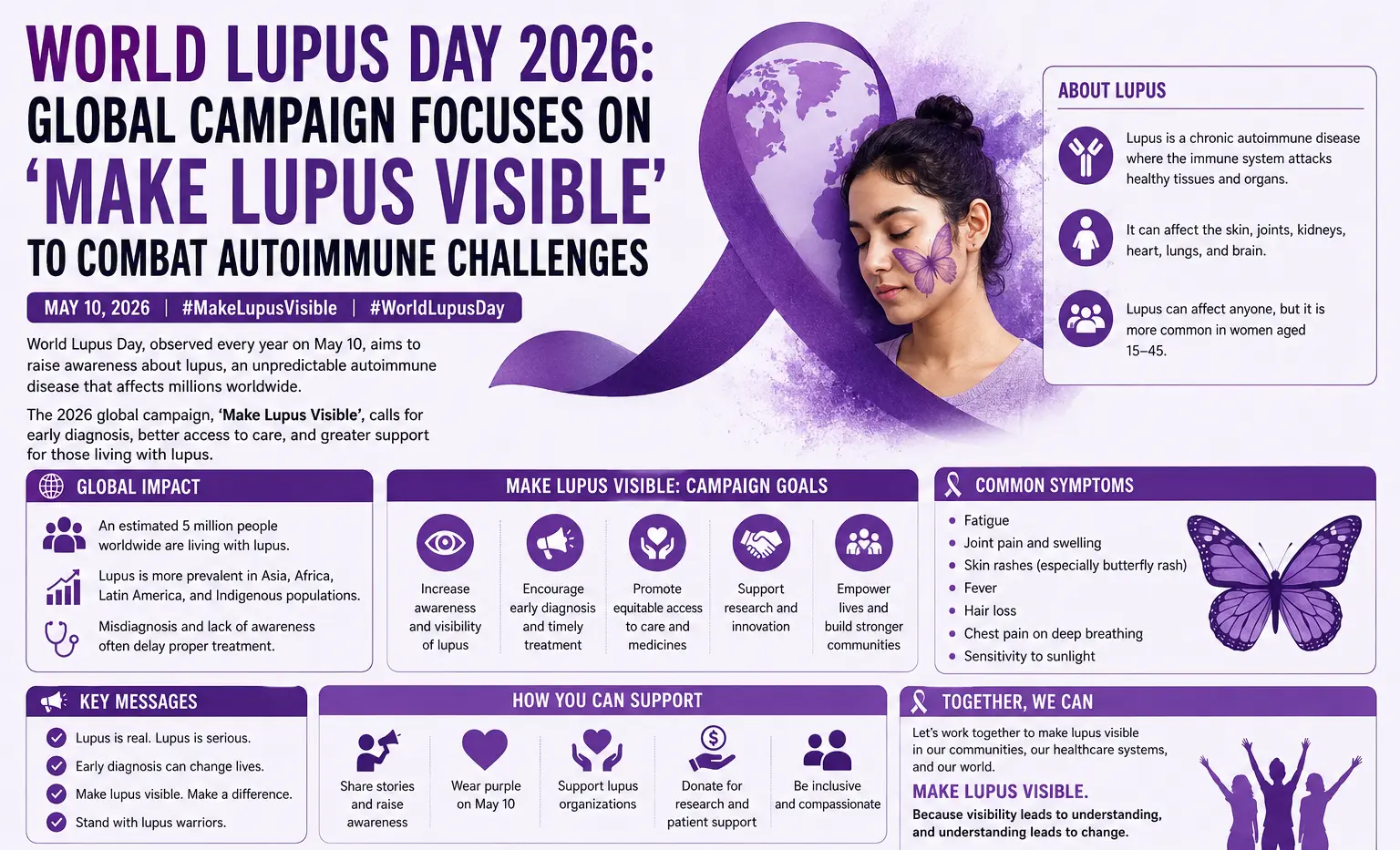
Shining Light on the Invisible Illness: World Lupus Day
Observed globally on May 10, World Lupus Day 2026 serves as a major clinical and public advocacy milestone dedicated to increasing public understanding of Systemic Lupus Erythematosus (SLE). Established in 2004 by the World Lupus Federation, this global observance seeks to rally support for millions of patient warriors battling this complex condition, secure dedicated medical research funding, and eliminate the social stigma associated with autoimmune disorders.
The 2026 Theme: 'Make Lupus Visible'
The official theme for the year 2026 is “Make Lupus Visible”. Because many debilitating aspects of the disease are internal, patients often appear perfectly healthy on the outside while enduring intense physical and psychological strain. The campaign urges the international community, medical fraternities, and policymakers to look past the surface, ensuring earlier diagnosis and robust healthcare access.
---
Clinical Overview and Common Manifestations
Lupus is a chronic, non-contagious autoimmune disease that occurs when the body's immune system mistakenly targets and attacks its own healthy tissues and organs. This aberration triggers widespread inflammation and long-term tissue damage across multiple vital anatomical systems, including the joints, skin, kidneys, brain, heart, and lungs.
- Key Symptoms: Characterized by chronic fatigue, persistent low-grade fever, severe joint pain with swelling, unexplained hair loss (alopecia), and painful mouth ulcers.
- The Diagnostic Landmark: A classic clinical signature is the malar rash—a distinctive, butterfly-shaped facial rash that spreads across the bridge of the nose and cheeks, often aggravated by sunlight exposure (photosensitivity).
- Interdisciplinary Care Required: Management typically involves a multi-disciplinary medical team, including rheumatologists as primary coordinators, alongside nephrologists and dermatologists to mitigate life-altering complications like lupus nephritis.
For TNPSC, D.Pharm, and medical aspirants, understanding the pathophysiology of autoimmune diseases and global public health days are vital components of the Science and Human Health syllabus.