

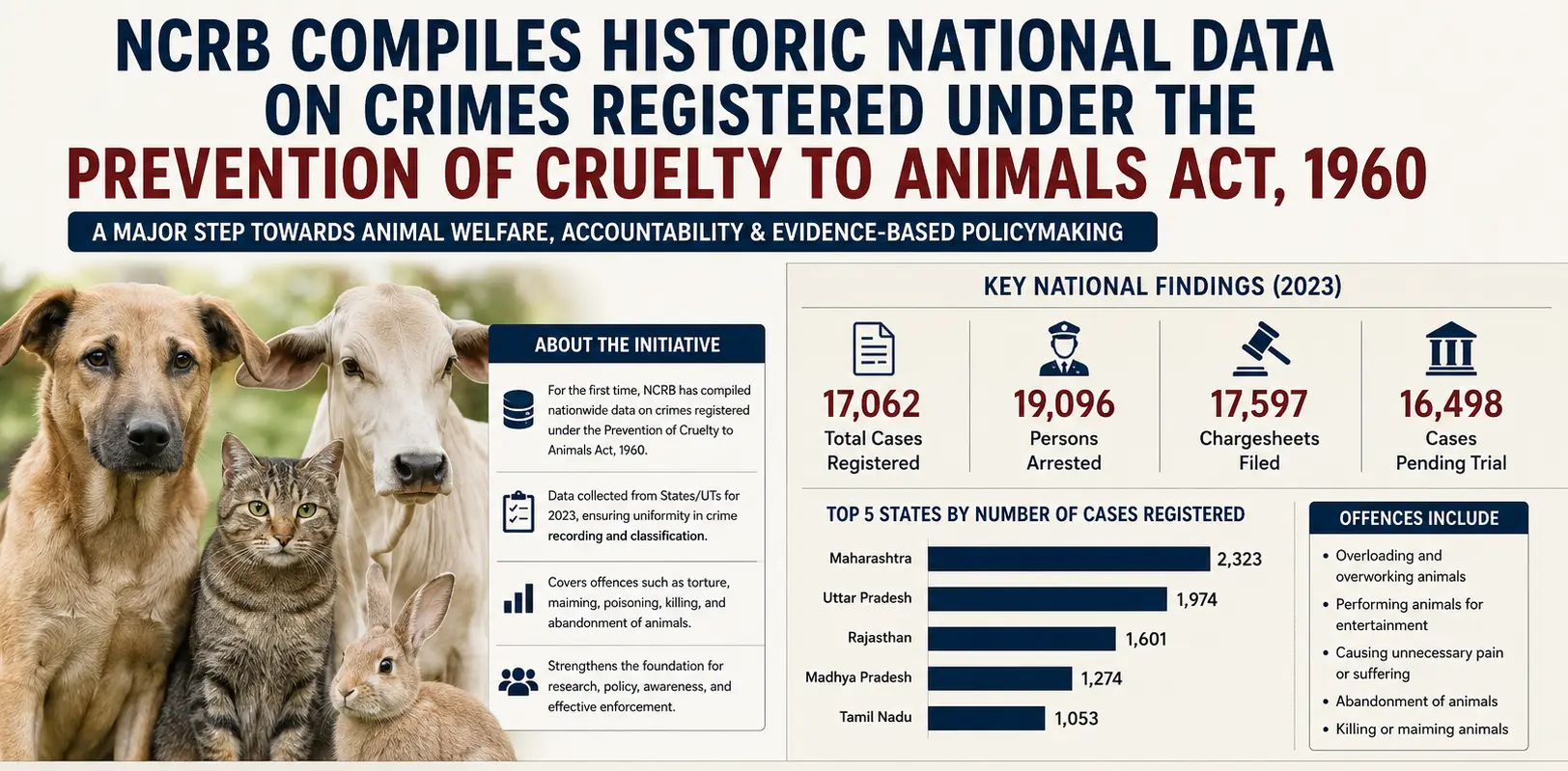
An Overview of Animal Protection Laws: NCRB Begins Tracking Cruelty Metrics
In a historic move toward consolidating environmental and wildlife metrics, the National Crime Records Bureau (NCRB) has, for the first time, compiled and structured national-level statistical data specifically tracking crimes registered under the Prevention of Cruelty to Animals (PCA) Act, 1960. Previously grouped under broad local laws without separate breakdowns, this standalone database provides critical transparency regarding offenses against voiceless creatures across India.
Core Objectives and Statutory Framework:
- The Primary Goal: The PCA Act, 1960, was enacted specifically to prevent the infliction of unnecessary pain or suffering on animals and to establish legal guardrails for animal welfare.
- Legal Definition of 'Animal': Strikingly broad under Section 2, the framework defines an 'animal' as any living creature other than a human being, encompassing domestic, captive, stray, and wild fauna.
- Animal Welfare Board of India (AWBI): Established under Section 4 of the Act, this statutory body acts as the primary advisory body to the Central Government, driving public awareness campaigns and supervising scientific or commercial interactions involving animals.
---
Geographical Breakdown of Registered Offenses
The newly released centralized data highlights regional variations in case registrations and enforcement. The highest volumes of cases under the PCA Act were concentrated across five primary states:
- Maharashtra: Leading in centralized documentation and active urban municipal monitoring.
- Madhya Pradesh & Uttar Pradesh: Reporting extensive rural and transit-related cattle protection interventions.
- Gujarat & Tamil Nadu: Showcasing strong community reporting, robust non-governmental active networks, and active stray management tracking.
For TNPSC and Central Services aspirants, this new data classification is highly significant for 'Social Issues, Environment Ecology, and Legal Frameworks' modules, offering specific case statistics to cite in governance papers.