

Overview
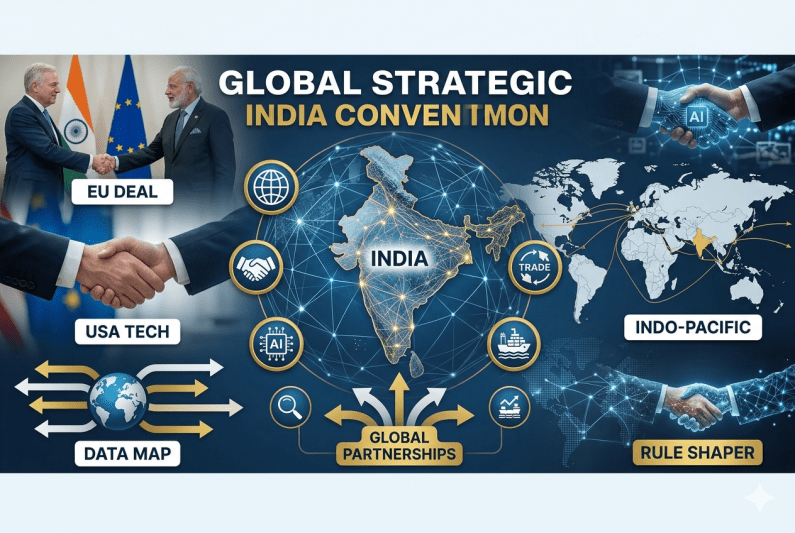
In 2026, India’s Vishva Mitra Policy emerged as a transformative foreign policy framework that moves beyond traditional diplomacy toward a results-oriented, partnership-driven global engagement model. The policy reflects India’s strategic shift to actively shape global economic, technological, and geopolitical outcomes while strengthening its position as a reliable international partner. It emphasizes multi-dimensional cooperation across trade, technology, defense, and maritime security.
Key Highlights
- Shift from traditional diplomacy to outcome-based global engagement
- Strengthening economic partnerships with major global powers
- India–European Union trade negotiations described as the “Mother of all Deals”
- Enhanced India–USA cooperation in semiconductor supply chains and AI development
- Recognition of India as a “Rule Shaper” at Raisina Dialogue 2026
- Focus on Indo-Pacific maritime security and trade route protection
- Expansion of strategic alliances across technology, defense, and trade sectors
Key Developments / Drivers
- Economic Diplomacy: Focus on trade agreements, investments, and supply chain integration
- Technology Partnerships: Collaboration in AI, semiconductors, and digital infrastructure
- Geopolitical Strategy: Strengthening alliances in Indo-Pacific region
- Maritime Security: Ensuring safe global trade routes and naval cooperation
- Global Governance Role: India influencing international norms and frameworks
- Strategic Autonomy: Balancing relations with multiple global powers
Strategic Importance
- Positions India as a key global decision-maker (“Rule Shaper”)
- Strengthens economic resilience through diversified partnerships
- Enhances national security via maritime and defense cooperation
- Boosts technological advancement through global collaboration
- Improves India’s standing in global supply chains and innovation ecosystems
Future Outlook
The Vishva Mitra Policy is expected to play a crucial role in defining India’s global leadership in the coming decade. By strengthening strategic alliances, expanding trade networks, and enhancing technological cooperation, India aims to emerge as a central player in global governance. This policy will also contribute to domestic economic growth by attracting foreign investments, improving industrial capabilities, and ensuring long-term geopolitical stability.