

Overview
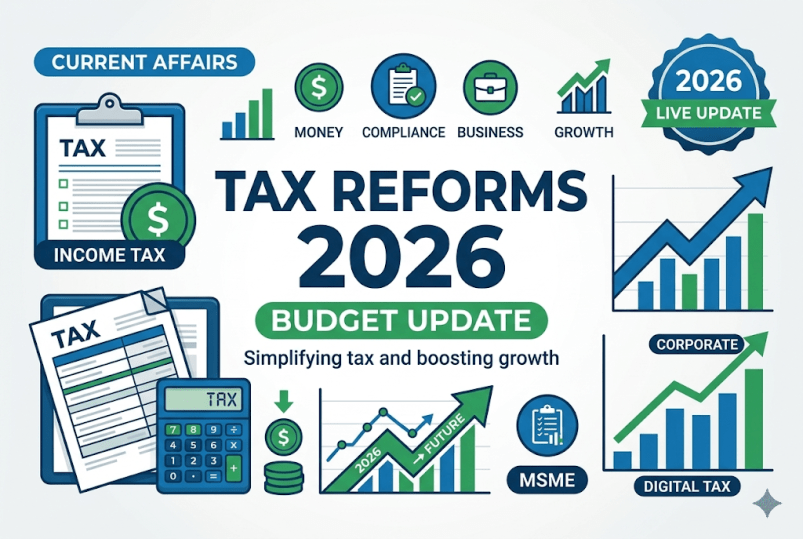
Following the presentation of the Union Budget 2026–27, the government introduced several tax reforms aimed at simplifying the tax system, improving compliance, and boosting economic activity. The changes focused on enhancing disposable income, encouraging investment, and supporting businesses.
Key Highlights
- Rationalization of income tax structure to reduce burden on middle-income groups
- Measures to simplify tax filing and improve compliance
- Incentives for startups and MSMEs through tax benefits
- Adjustments in corporate tax policies to attract investment
- Focus on digital tax systems and transparency
- Reduction of litigation through simplified procedures
Key Developments / Drivers
- Income Tax Reform: Changes aimed at increasing disposable income
- Corporate Tax Policy: Encouraging private investment and growth
- Compliance Simplification: Reduction in complex procedures
- Digital Taxation: Expansion of online systems and automation
- Business Support: Incentives for startups and MSMEs
- Revenue Stability: Balancing tax reduction with fiscal needs
Strategic Importance
- Boosts consumer spending and demand
- Encourages business investment and expansion
- Improves ease of doing business
- Strengthens tax compliance and transparency
Future Outlook
The tax reforms introduced in Budget 2026–27 are expected to support economic growth by increasing disposable income and encouraging investments. Continued simplification and digitalization of the tax system will enhance efficiency and reduce compliance burdens.